

Reducing readmission to acute specialised mental health inpatient units
The rate of readmission to hospital within 28 days of discharge is a commonly-used indicator of how well a health system is performing.
For people accessing mental health services, this indicator can help us better understand the effectiveness of in-hospital treatment as well as follow-up community care. While there are other factors that influence early readmissions, such as the episodic nature of mental illness, this indicator is still a useful way to measure and monitor how well mental health services are meeting the needs of the people they care for.
Measuring readmissions to acute specialised mental health inpatient units
The 28-day timeframe is internationally accepted as an appropriate period for the measurement of readmissions following discharge from an acute inpatient mental health service. This standard was endorsed by the Health Chief Executives Forum’s Mental Health Information Strategy Standing Committee in 2011.
The benchmark for this indicator is ≤12% patients admitted to an acute specialised mental health inpatient unit having one or more readmissions within 28 days of discharge.
How do we measure up?
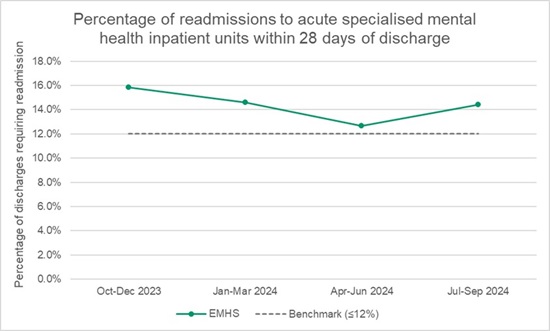
The graph below shows the combined rate of readmissions to acute specialised mental health inpatient units within 28 days of discharge across the EMHS hospitals.
Chart: Percentage of readmissions to acute specialised mental health inpatient unit within 28 days of discharge.
What the figures mean
The graph shows the quarterly rate of readmissions to acute specialised mental health inpatient units within 28 days of discharge from EMHS public hospitals.
A rate lower than the benchmark is desirable.
The overall rate of readmissions to acute specialised mental health inpatient units within 28 days of discharge is shown as being above the benchmark for the last four quarters.
EMHS aims to achieve a consistent rate of less than 12 per cent and this is an area subject to ongoing review.